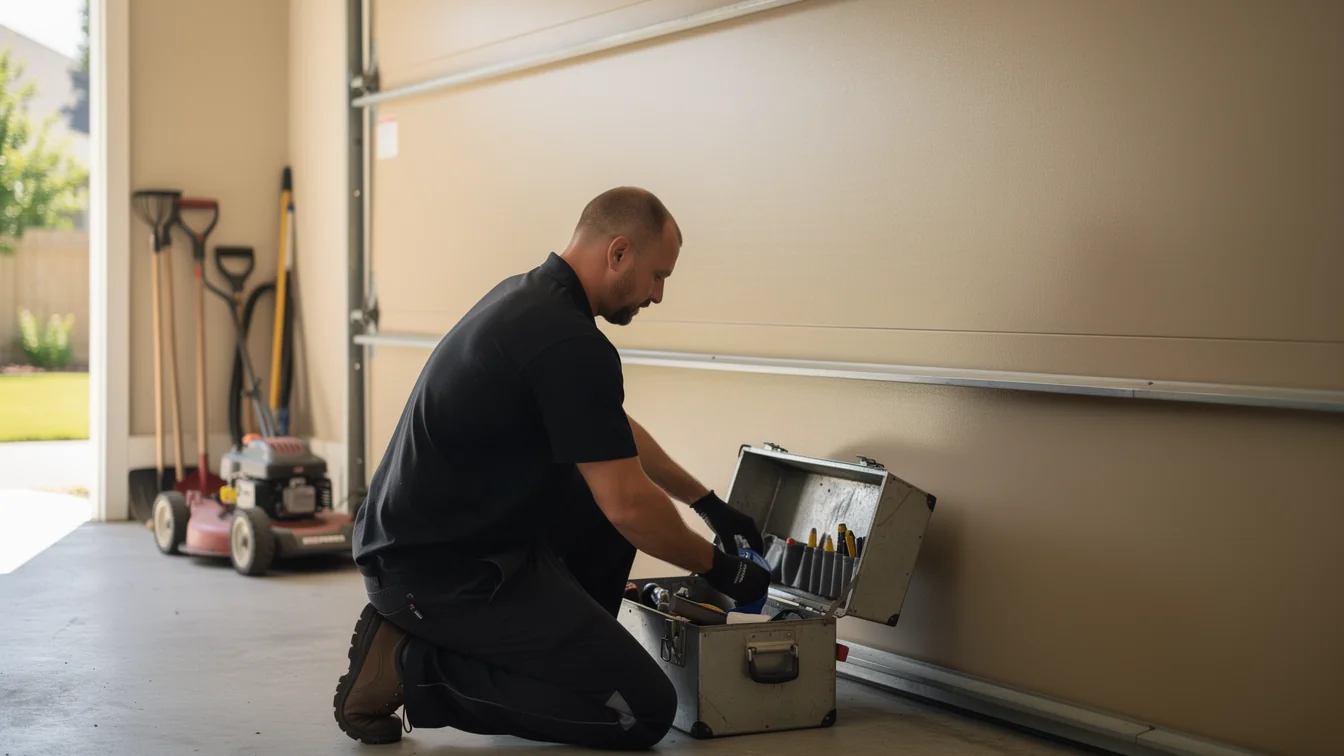
 What Actually Happens When a Tech Shows Up in Evans
Most Evans houses were built between 1978 and 2007, so a real service call checks age-specific wear on springs, rollers, and openers from that exact era.
Is Your Evans Garage Door Worth Fixing, or Done
Most Evans homes were built between 1978 and 2007. Here's how that age and our moderate heat band affect whether your garage door is worth repairing.
Local detail
What the Weather Here Does to It
Evans sits in a moderate heat climate band, not the kind of extreme swing that cracks panels or warps steel in a season. That's good news for the door itself, but it means the wear you see on an older unit here is almost always mechanical, not weather damage. Springs fatigue from cycle count, not from heat. Rollers wear from use, not from freeze-thaw. If your house was built in the 1978-2007 window, which covers most of this area, your door has likely logged two or three decades of daily cycles in a climate that doesn't punish the materials directly. That's actually a point in favor of fixing rather than replacing: the track, the frame, and the opening itself usually haven't been stressed by weather the way they would in a harsher band. What fails on a house like this is almost always a part, not the structure around it. That distinction matters when you're deciding whether a repair call is worth the truck fee.
The area
The Problem
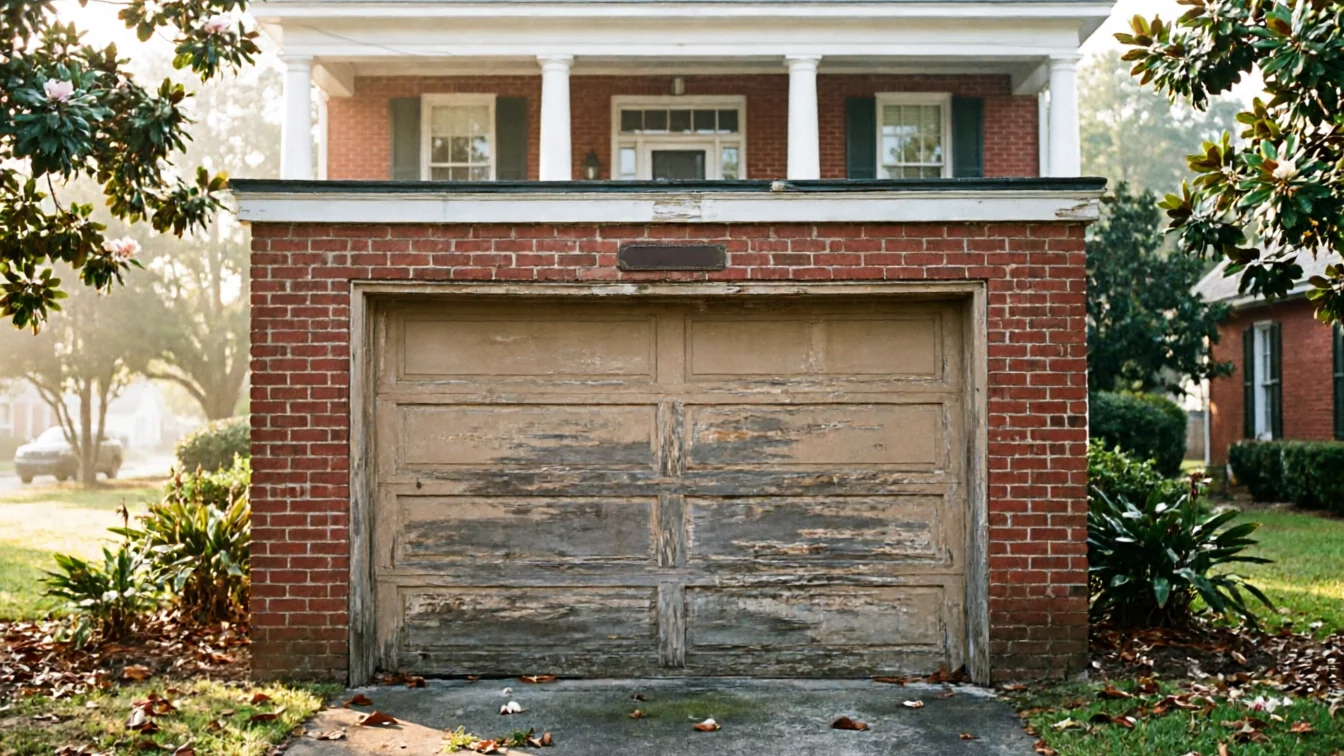
A door installed when a house was built in 1988 - the median year for this area - is old enough that its torsion spring has almost certainly been replaced at least once, maybe twice, and its opener is on borrowed time even if it still runs. The issue isn't that these doors are bad. It's that homeowners often can't tell the difference between a spring that needs swapping for $150-200 worth of parts and labor, and a door whose track is bent, whose panels are rusted at the seams, or whose opener motor is drawing more current than it should. One of those is a quick fix. The other is money spent chasing a door that's going to need something else next year. Across the 3,963 owner-occupied houses in this service area, most sitting in that 1980s-90s construction window, the honest answer is usually: fix the spring, fix the opener circuit board, replace the rollers - but if the door itself has rust-through on the bottom panel or the track is pulled away from the frame, stop spending money on it.
What we find
Season by Season
Because the heat band here is moderate, you don't get the brutal expansion-contraction cycle that ages seals and hardware fast. What you do get is steady year-round use, and that's what actually wears a door down. Spring and fall are when most spring failures show up here, simply because that's when people are in and out of the garage more - yard equipment, holiday storage, general traffic. Summer heat is real but not extreme enough on its own to crack a panel or warp a track; it just makes an already-tight opener work a little harder. Winter doesn't bring the hard freezes that would seize up lubricant or crack an old wood composite door. None of the four seasons here delivers a single dramatic failure point. Instead it's a slow accumulation: a few thousand more open-close cycles every year on hardware that was never designed to last forever. That's the real pattern to watch for, not a weather event.
How we work
What to Check
Start with the springs - if your house dates to the common 1978-2007 range for this area, ask when they were last replaced, because torsion springs are rated in cycles, not years, and nobody tracks cycles. Next, look at the bottom two panels for rust or soft spots; that's where moisture collects over time even in a moderate climate. Check whether the opener is original - a motor running since the 1980s or 90s is worth replacing on its own merits regardless of what the door does. Rollers should turn smoothly, not grind. If the track has gaps where it meets the wall brackets, that's a structural issue, not a lubrication one, and it changes the math on repair versus replace. One honest limit here: we don't carry parts for every discontinued opener model, and on a door old enough to need a part nobody stocks anymore, replacement ends up cheaper than waiting on a special order.
Questions
Common questions
How do I know if my garage door is too old to fix?
If the panels have rust-through, the track is separated from the frame, or the opener model is old enough that parts are special-order only, replacement usually costs less than chasing repeated repairs. A worn spring, bad rollers, or a failing opener circuit board on an otherwise sound door, though, are straightforward fixes.
Does Evans' climate shorten garage door life?
Not much on its own. Evans sits in a moderate heat band, so you don't get the extreme temperature swings that crack panels or warp track. Most wear on doors here comes from years of regular use rather than weather, which is why mechanical parts fail before the door structure does.
My house was built in the late 1980s - is the door original?
It's possible, but unlikely to be the exact original hardware. Most houses from that era have had at least one spring replacement by now, and many have a replacement opener. Worth checking the opener's age specifically, since that's the part most likely to still be original and nearing the end of its life.
Recommendation
You Might Also Like
More garage door guides for Evans homeowners.
What Actually Happens When a Tech Shows Up in Evans
Most Evans houses were built between 1978 and 2007, so a real service call checks age-specific wear on springs, rollers, and openers from that exact era.
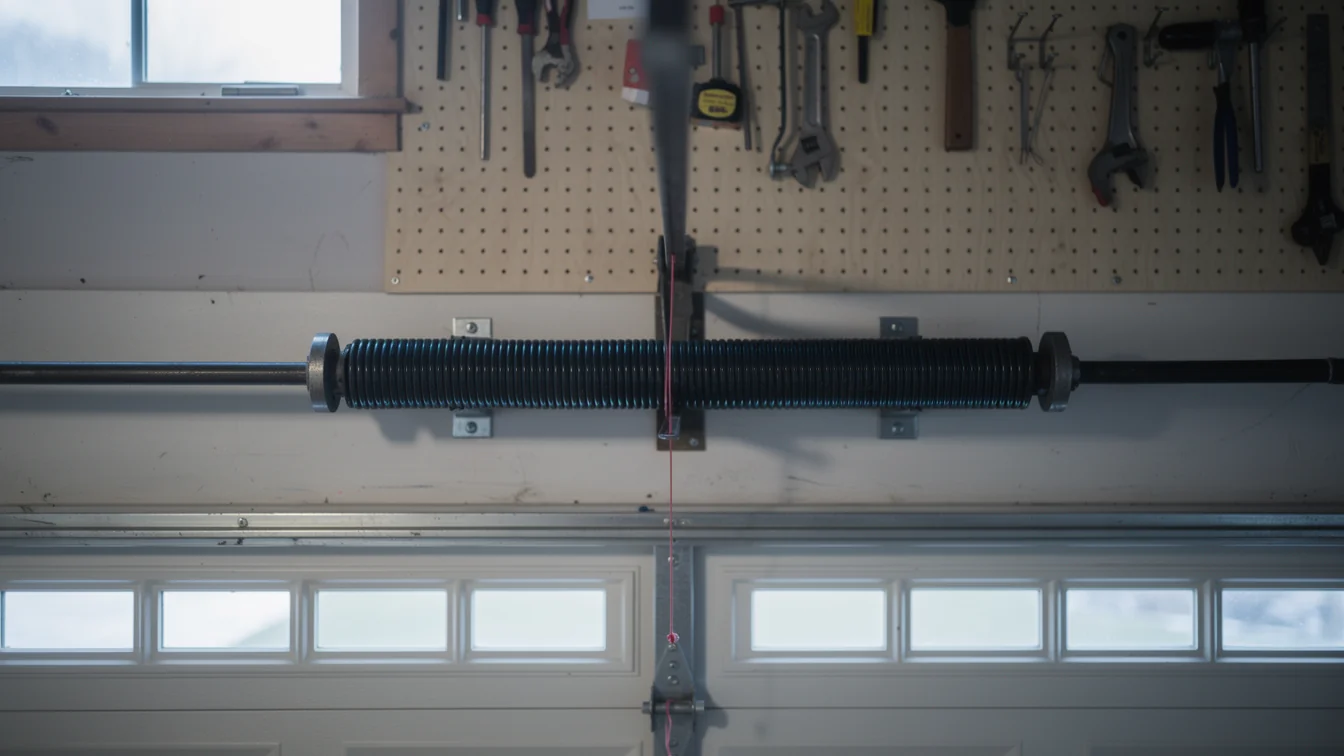 Why Evans Garage Doors Wear the Way They Do
Evans homes mostly date to 1978-2007 and sit in a moderate-heat climate band.
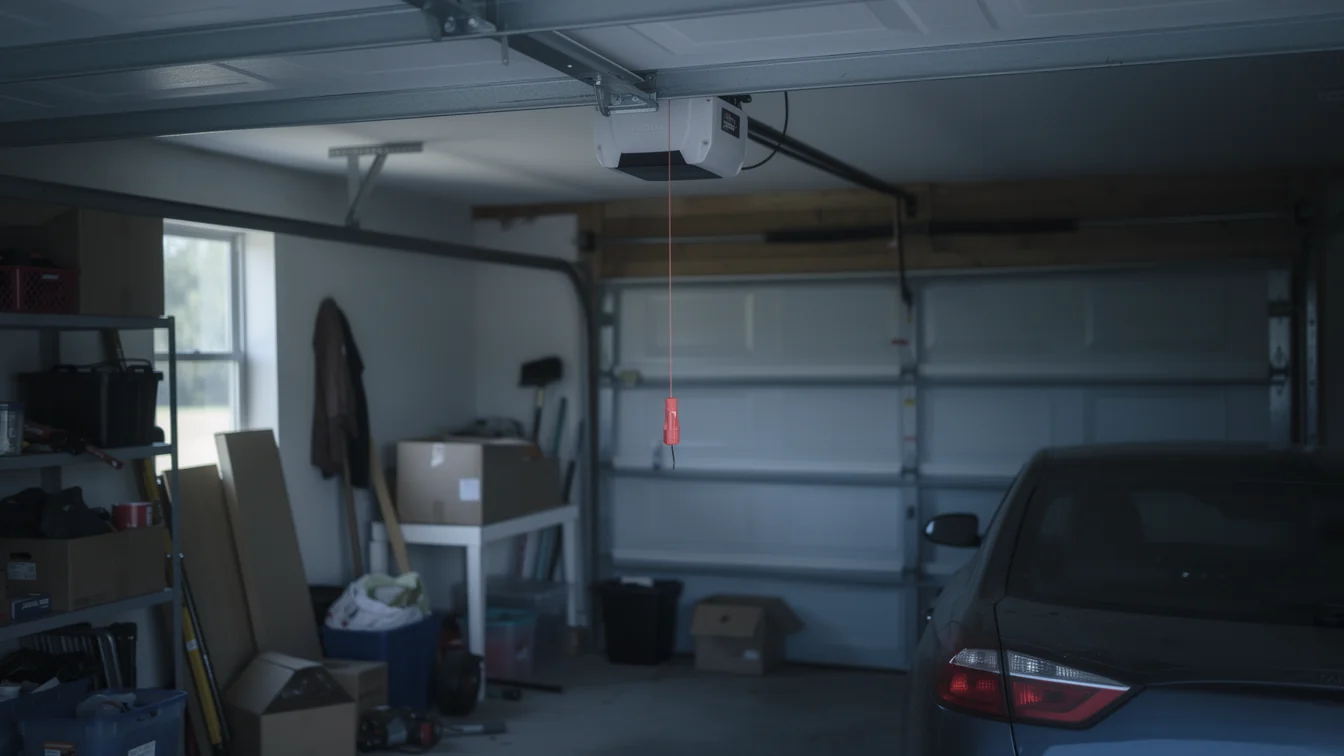 Evans Garage Doors: Openers, Power Cuts, and the Houses Behind Them
Evans, GA homes built 1978-2007 run original garage door openers past their prime.
Ready when you are
Need a garage door sorted in Evans?
Evans Garage Door Pros repairs and installs garage doors, springs and openers in Evans, GA and the surrounding area.